Infrastructure
Designing
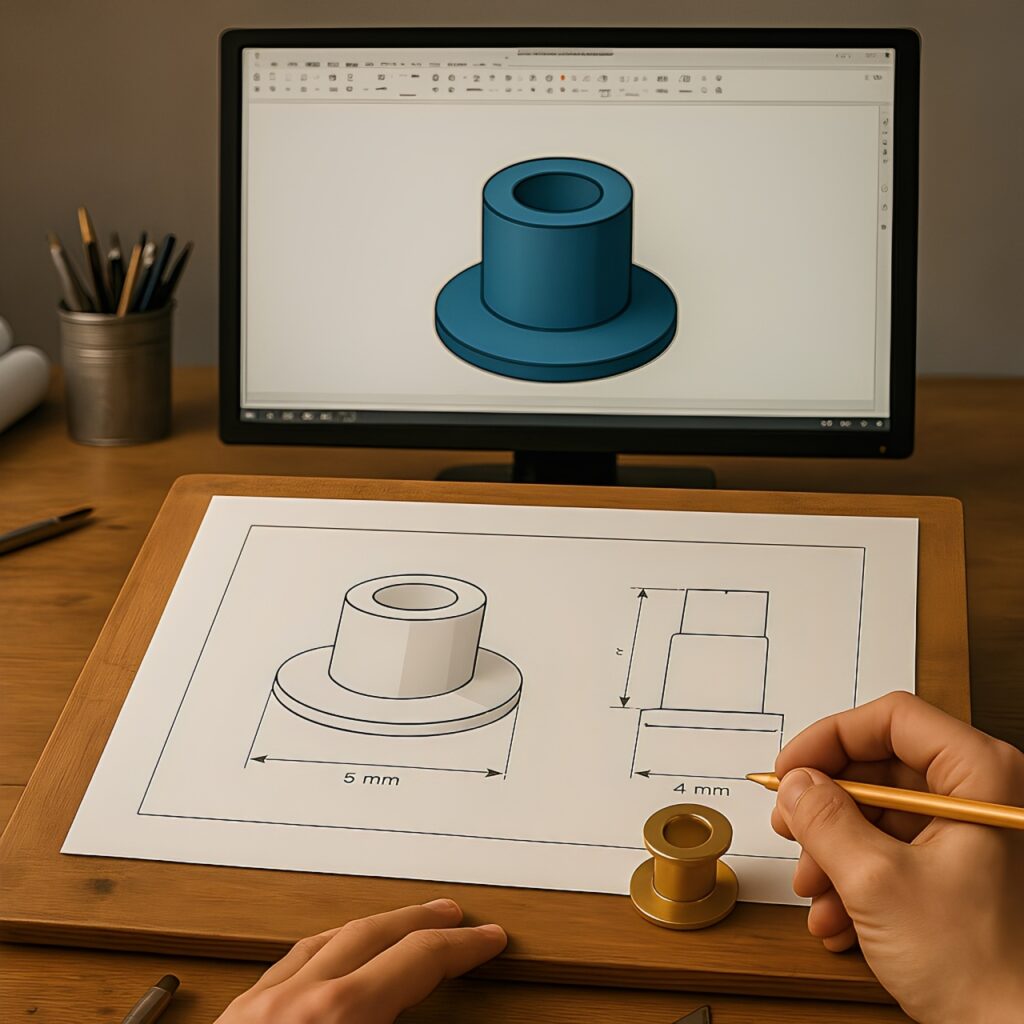
The customer tells what they need — example: “5 mm brass eyelet with nickel finish.”
Engineers make a drawing on the computer (CAD software).
The drawing shows size, thickness, hole, and finish type.
After approval, this drawing is sent to the tool room to make the die (the shaping tool).
Tool Room
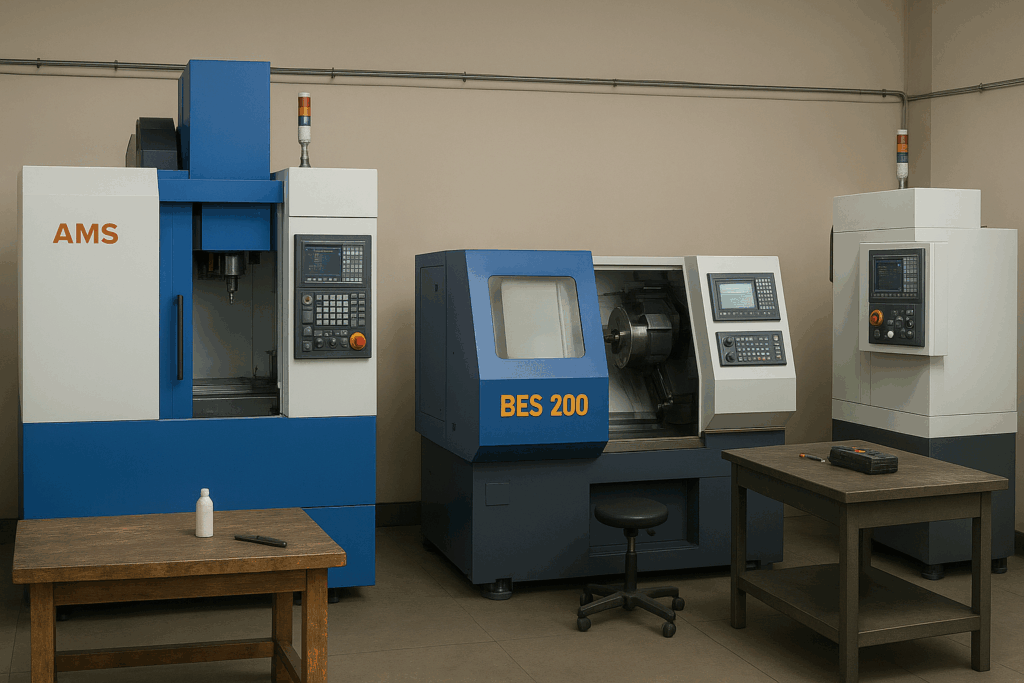
Workers cut and grind strong steel blocks (like D2 or HCHCr) using CNC and grinding machines.
They heat-treat the steel to make it hard and long-lasting.
Then they assemble and test the die on a press machine to see if it makes the correct part.
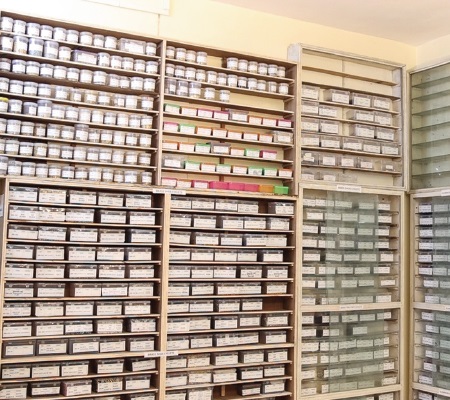
We have fully Equipped Captive Tool room with CNC and VMC Machines to Fabricate Progressive tools, as per Our Customer’s Product Specification. The process starts from Designing to Commercial Production withinminimum period and with utmost proficiency.
Raw Material
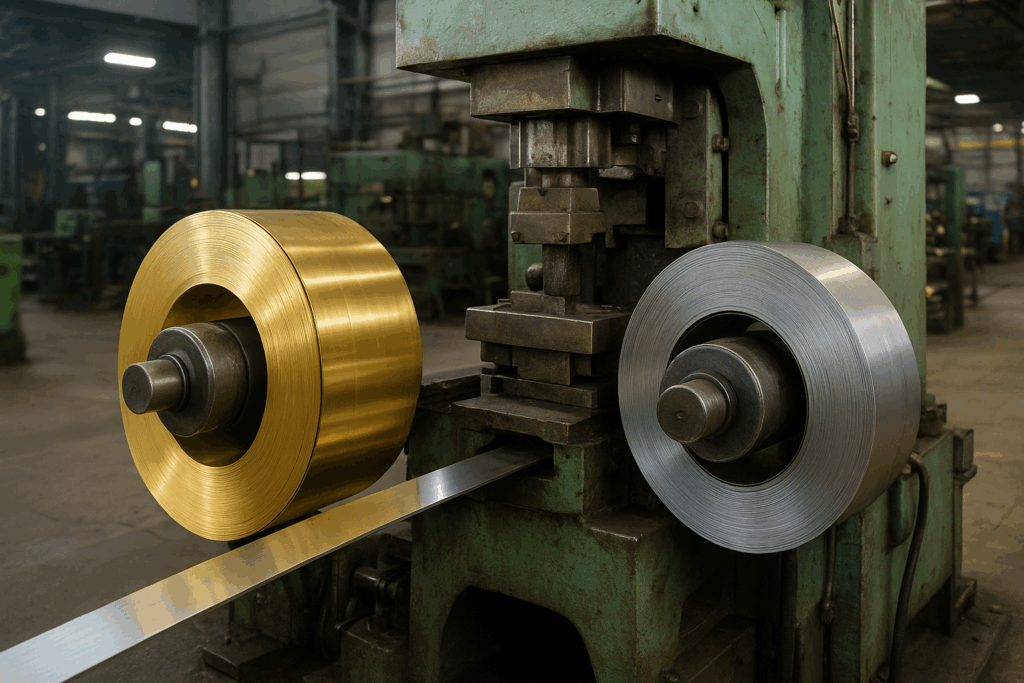
- Metal comes in rolls (called coils) — brass, copper, steel, or aluminium.
- The coils are cut into strips of the right width using a slitting machine.
- The strips are loaded into the press machine to start production.
Press Shop
-
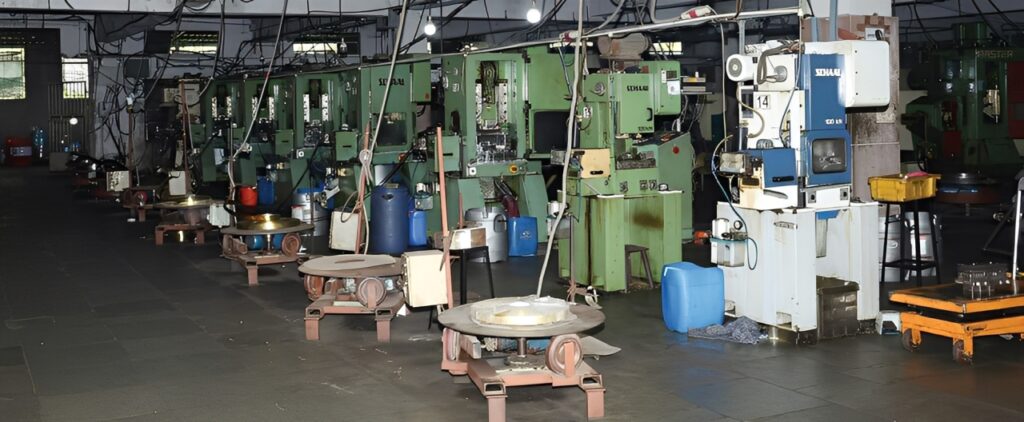
The coil is fed into the press machine with the die fitted inside.
-
Every time the press moves down, it cuts and forms one piece.
-
In a progressive die, many actions happen together — first it cuts the circle, then makes a hole, then shapes the cup/barrel.
-
Each stroke makes one ready part.
Polishing
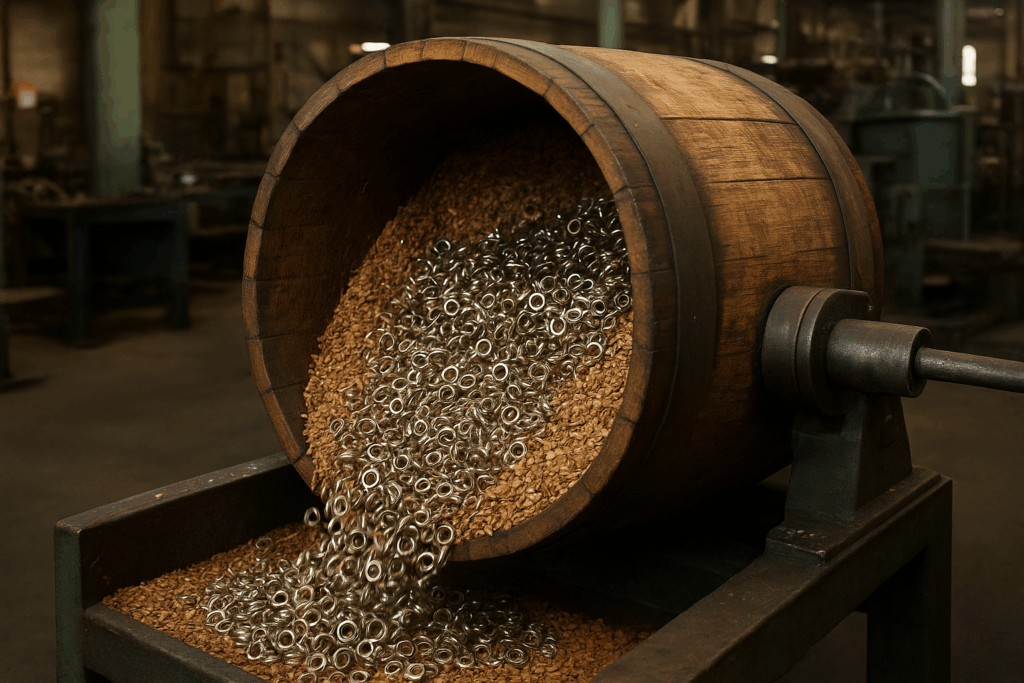
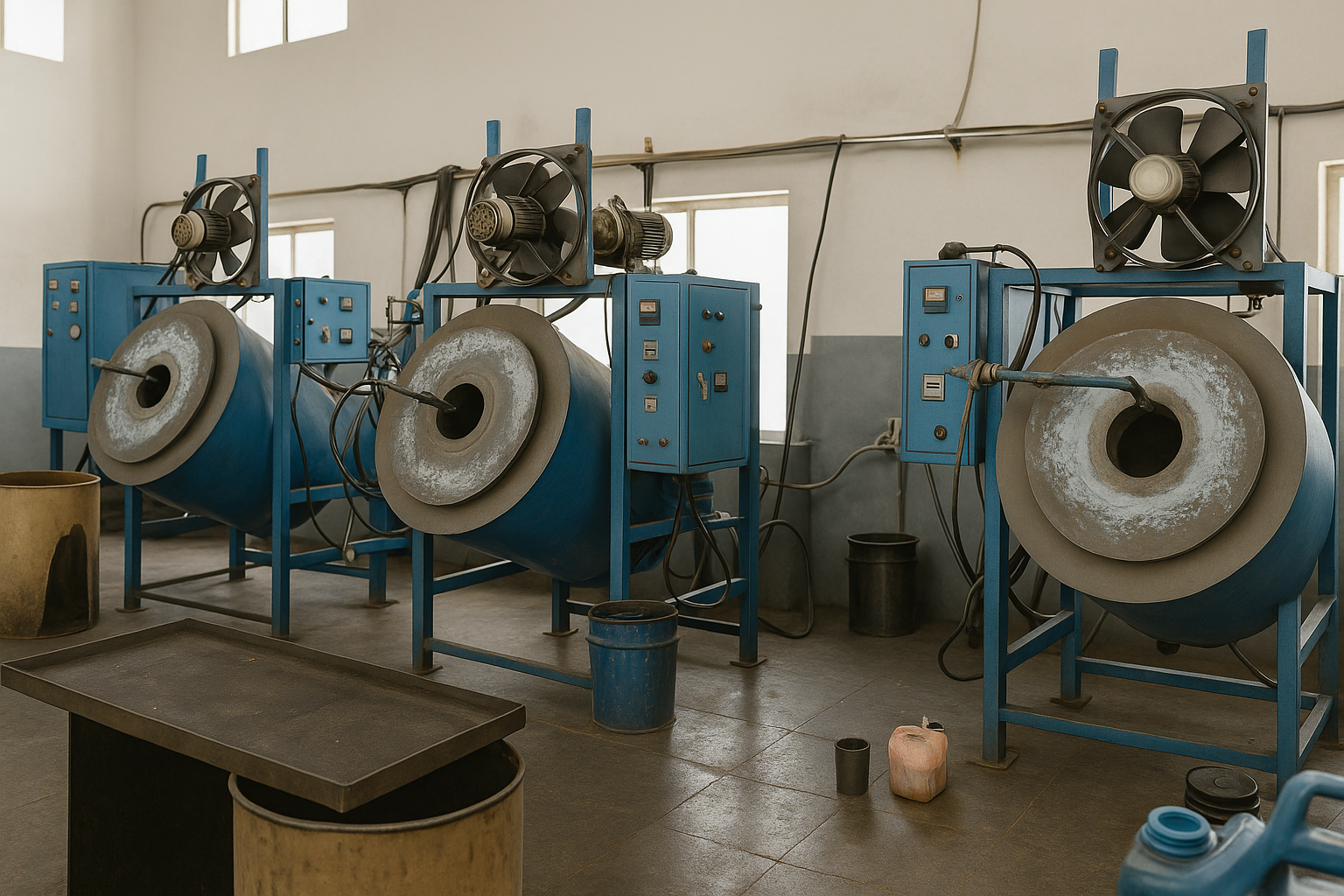
Parts go into a vibratory polishing machine with small stones and cleaning liquid.
The machine shakes and makes the parts rub against each other — they come out smooth and shiny.
Then they are dried in a hot-air dryer.
Plating
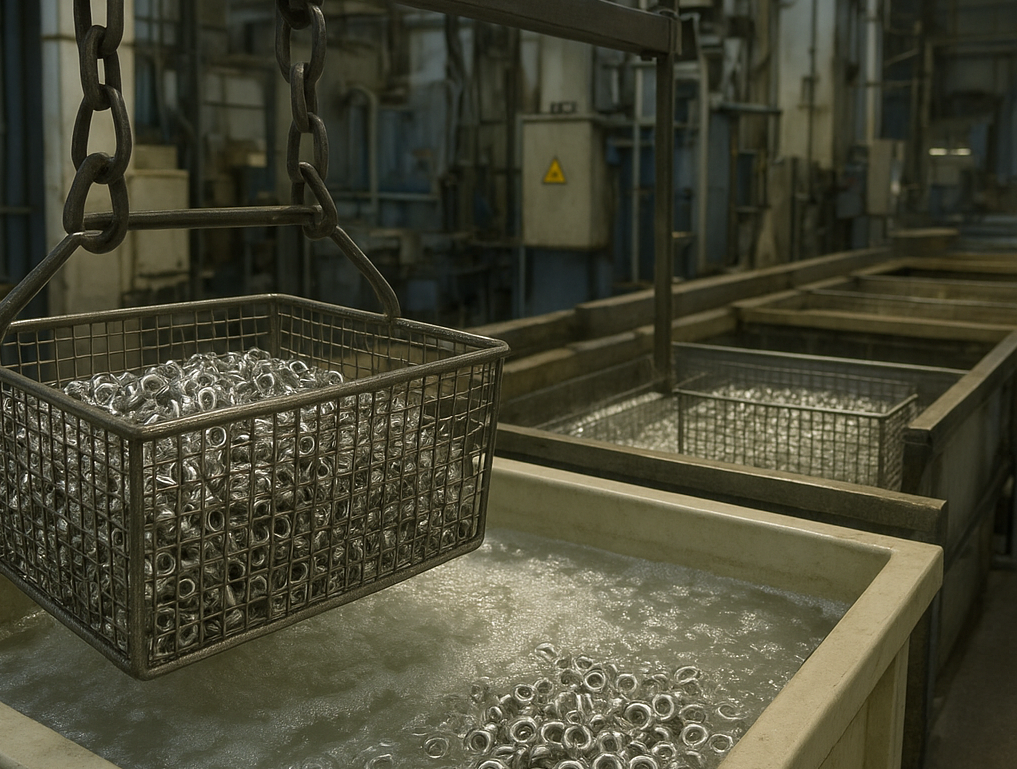
First, the parts are cleaned in chemical tanks to remove oil and dirt.
Then they go into plating tanks (Nickel, Brass, Zinc, Chrome, etc.).
Electric current makes a thin metal layer stick on the part.
After plating, they are rinsed with water and dried.


Coloring / Finishing
After plating, parts are sprayed or dipped in color solution.
Then they are baked in an oven to fix the color and give a long-lasting shine.

Packaging
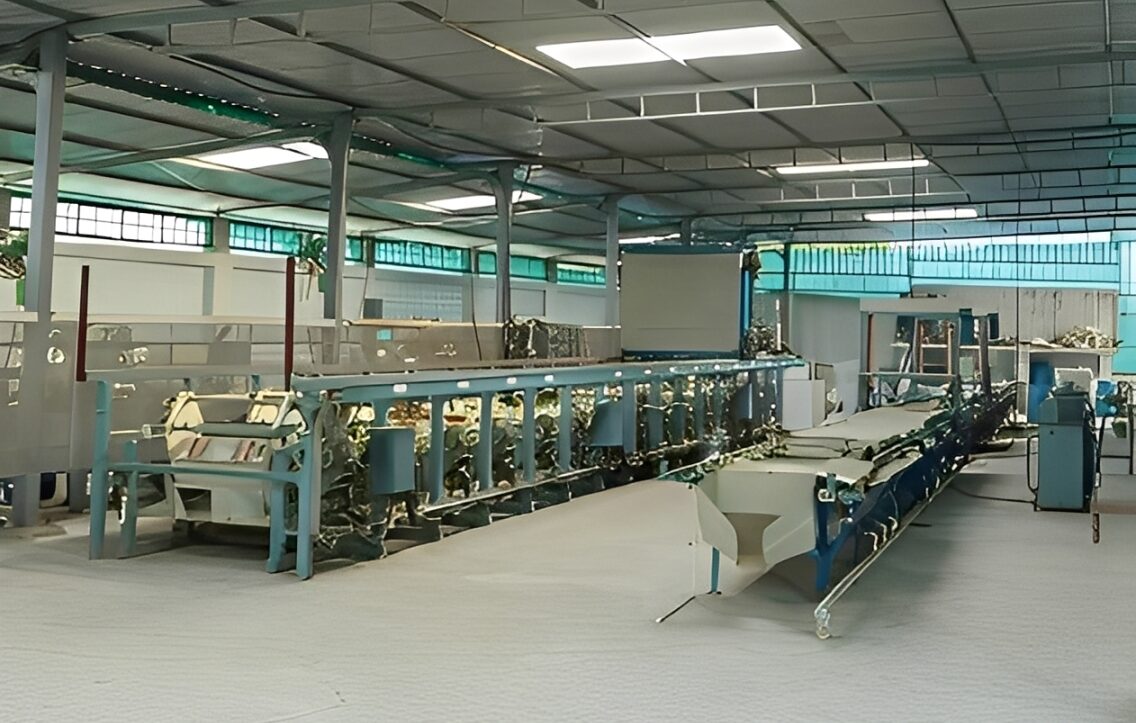
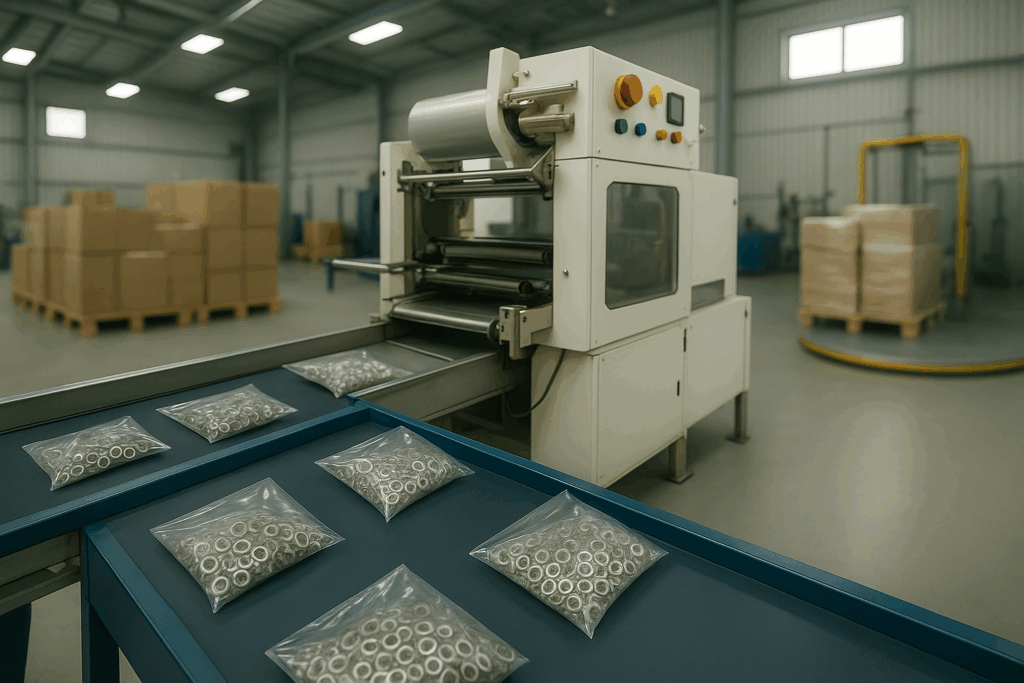
Finished pieces are counted automatically (like 500 or 1000 pieces per bag).
They go into automatic sealing machines that pack them in plastic pouches.
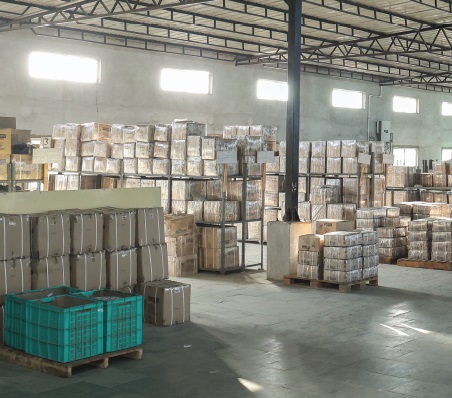
Then pouches go into cartons.
Cartons are stacked on pallets and wrapped tightly using an automatic pallet wrapping machine for safe transport.